You just drove away from a windshield replacement, and everything feels normal. The glass is crystal clear, and no scary warning lights are blinking on your dashboard.
You might think you just saved yourself a few hundred dollars by skipping that ADAS calibration the technician mentioned. However, in the world of modern automotive safety, feeling fine is often a dangerous illusion.
Advanced Driver Assistance Systems (ADAS) are the silent guardians of your vehicle. They manage everything from your lane-keeping assistance to your automatic emergency braking.
While your car might seem like it is functioning perfectly, a hidden misalignment could be lurking behind that new glass. Skipping this step isn’t just a gamble on your wallet. It is a gamble on your life.
Precision of the Invisible Eye
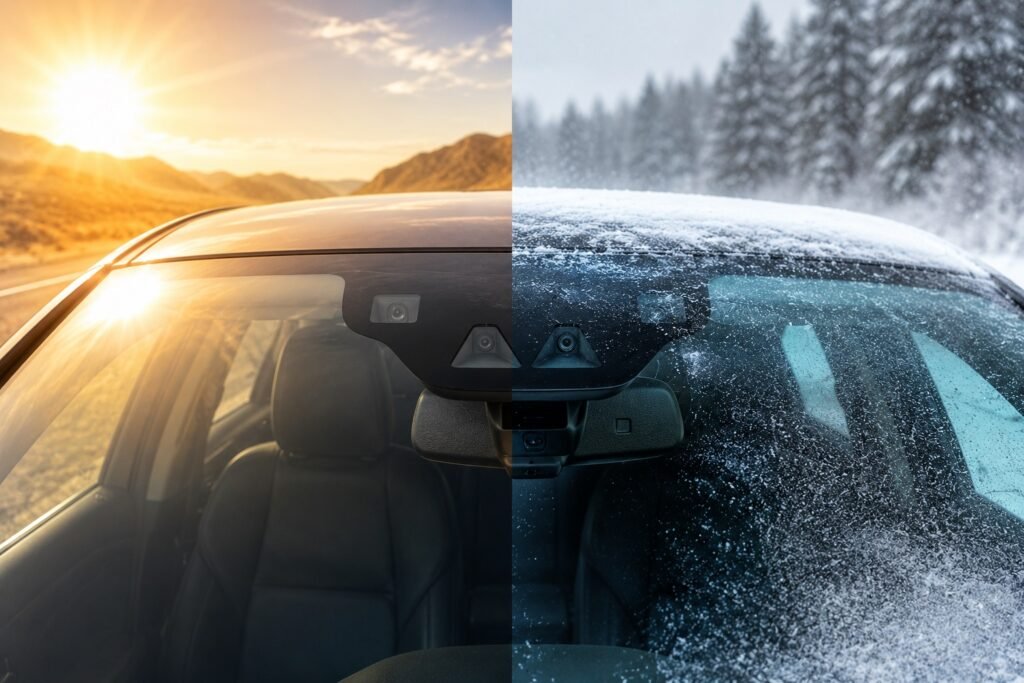
Most people view a windshield as a passive shield against wind and bugs. In reality, your windshield serves as the primary lens for your car’s forward-facing camera.
This camera is the heart of your ADAS. When a glass shop performs a windshield replacement, they physically move this camera.
Think of it like a professional sniper scope. If you drop the rifle, the scope might look perfectly fine. However, if that scope shifts by a fraction of a millimeter, you will miss your target by several feet at a distance.
Your car’s camera works the same way. It uses complex math to calculate the distance between you and the car ahead. If the camera angle is off by even one degree, the computer’s vision becomes distorted.
The Silent Failure Trap
The most common reason drivers skip calibration is the lack of a warning light. We have been trained to believe that if something is wrong, the car will tell us. Unfortunately, ADAS technology does not always work that way.
Most systems are designed to keep working even if they are slightly misaligned. The camera continues to feed data to the computer, and the computer continues to process it.
The system doesn’t know it is “blind” in one eye; it simply assumes the data it receives is accurate. This leads to a silent failure, where the system initiates a safety maneuver based on incorrect coordinates.
Why “Good Enough” Isn’t Good Enough
You might argue that you are a great driver and don’t rely on these gadgets. However, modern cars are built with these systems integrated into the very soul of the vehicle.
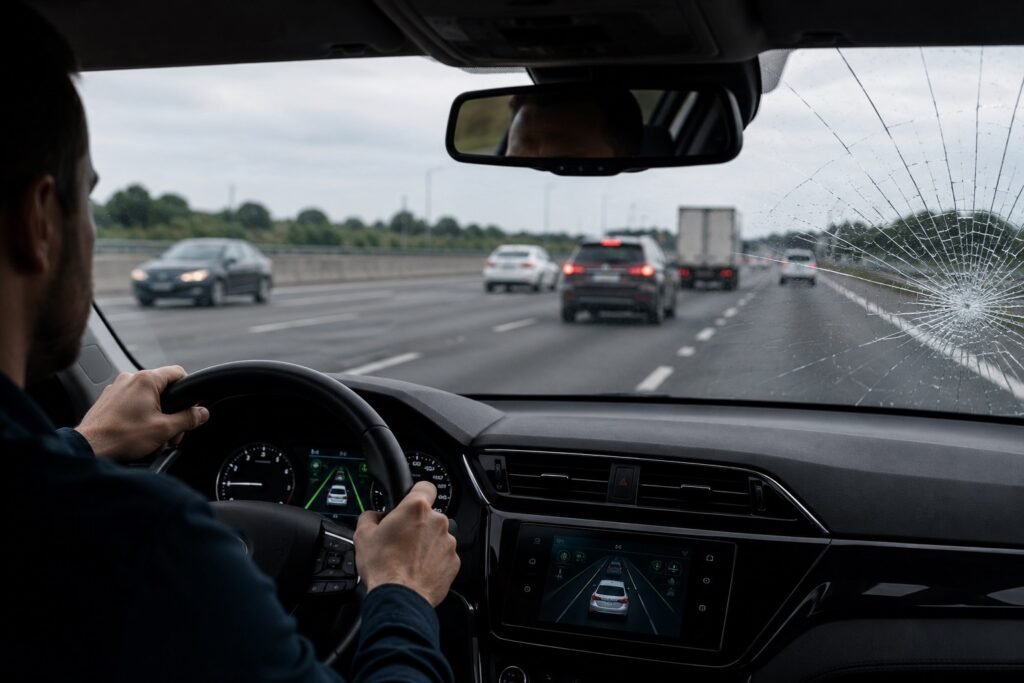
If your automatic braking system thinks a car in the next lane is actually in front of you, it may slam on the brakes at 70 mph.
This is not a theoretical risk. If your sensors are misaligned, the following errors are common:
- Late Braking: The car detects an obstacle too late because it miscalculated the distance.
- Steering Jerks: The lane-keep assist sees the lane line in the wrong place and pulls your steering wheel toward traffic.
- Adaptive Cruise Confusion: Your car fails to maintain a safe gap because it can’t accurately judge the speed of the vehicle ahead.
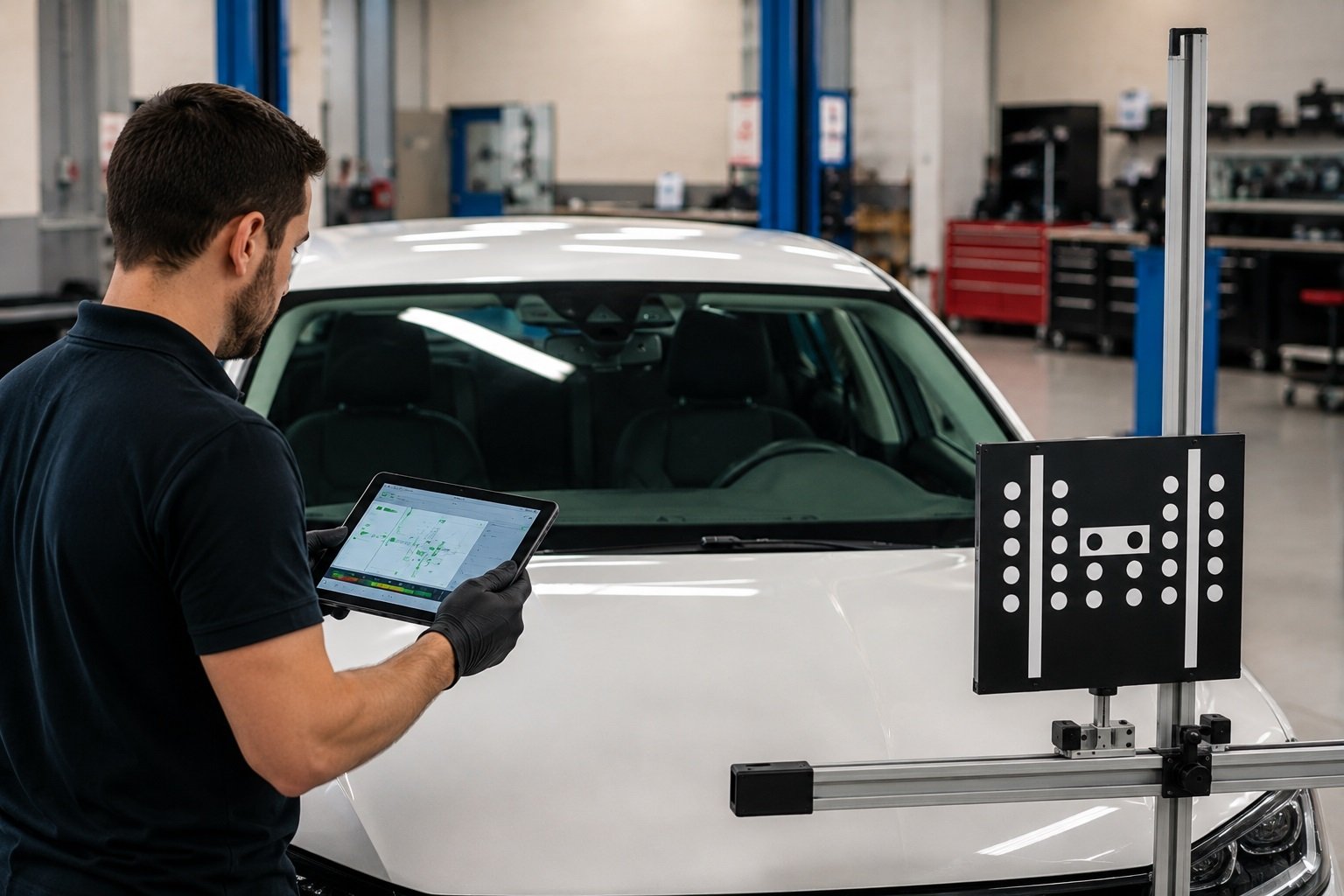
At Starbright Auto Glass, we see these issues as entirely preventable. We treat every windshield replacement as a high-stakes electronic repair, not just a glass swap.
Real-World Driving Risks You Might Not Notice Right Away
What makes this situation more dangerous is how normal everything can feel at first. Most drivers won’t notice anything wrong during short trips or low-speed driving.
The real issues tend to show up on highways, in heavy traffic, or during sudden braking situations where timing matters the most.
By the time the system reacts incorrectly, you often don’t have enough time to correct it manually.
Economic Reality: Insurance and Liability
Beyond physical safety, skipping calibration is a massive financial risk. Most modern insurance policies actually require you to follow manufacturer guidelines during a repair.
If you skip a mandatory calibration and later get into an accident, your insurance company might refuse to cover the claim.
Furthermore, if a technician discovers that a failed safety system caused an accident because of skipped calibration, you could face personal liability.
In 2026, the data logs in your car act like a black box. They will show exactly when the glass was replaced and whether a calibration sequence ever occurred.
Frequently Asked Questions
Why does my dashboard not show an “Error Light” if calibration is needed?
ADAS cameras are often capable of self-checking for electronic failures, but they cannot always detect physical misalignment.
If the camera is still plugged in and sending a signal, the computer assumes everything is okay. It doesn’t realize the camera is pointed two inches too low.
It only realizes there is a problem when the physical geometry of the road doesn’t match its internal map, but by then, it might be too late.
Can a 1-degree misalignment lead to a collision?
Absolutely. A 1-degree shift at the camera level can result in a 3-to-5-foot error on the road at a distance of 100 feet. This means your car might think a pedestrian is on the sidewalk when they are actually in the middle of your lane. Precision is the only thing standing between a near miss and a catastrophic impact.
Does my insurance policy mandate ADAS calibration after glass replacement?
In almost every case, yes. Most major insurers cover the cost of calibration as part of a comprehensive glass claim. They do this because it is cheaper for them to pay for a $300 calibration than a $30,000 collision repair. Check your specific policy, but Starbright Auto Glass typically works directly with providers to ensure this critical safety step is covered.
Parting Thoughts
The temptation to skip ADAS calibration after a windshield replacement is understandable. We all want to save time and money. However, a windshield replacement is no longer a simple mechanical fix. It is a digital recalibration of your car’s most important safety tools.
When you drive a car with uncalibrated sensors, you are essentially blindfolding your vehicle. You are forcing it to make life-and-death decisions based on “blurry” data.
Don’t take that risk. Ensure your vehicle’s eyes are perfectly aligned by choosing a professional team that prioritizes technology as much as they do glass. For expert service that keeps your safety systems in check, visit Starbright Auto Glass and drive with the peace of mind you deserve.