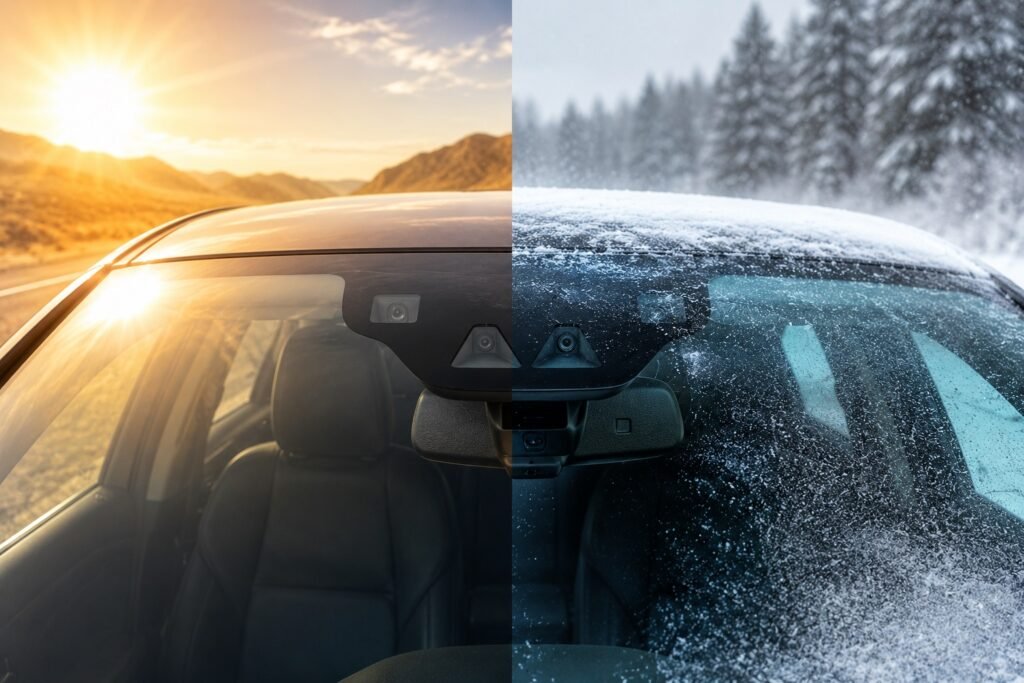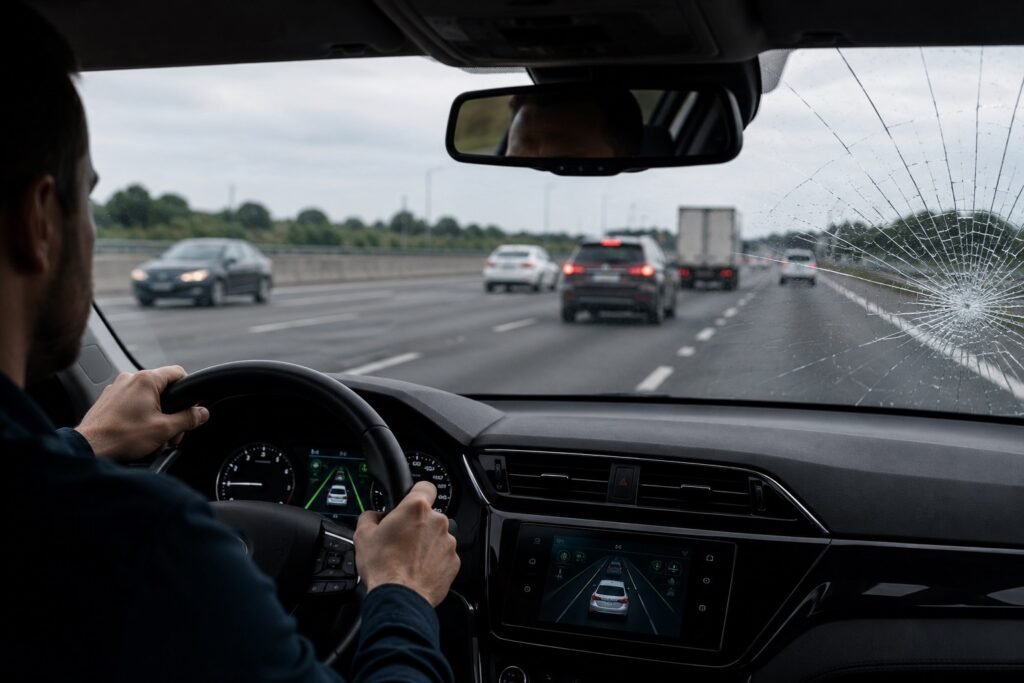
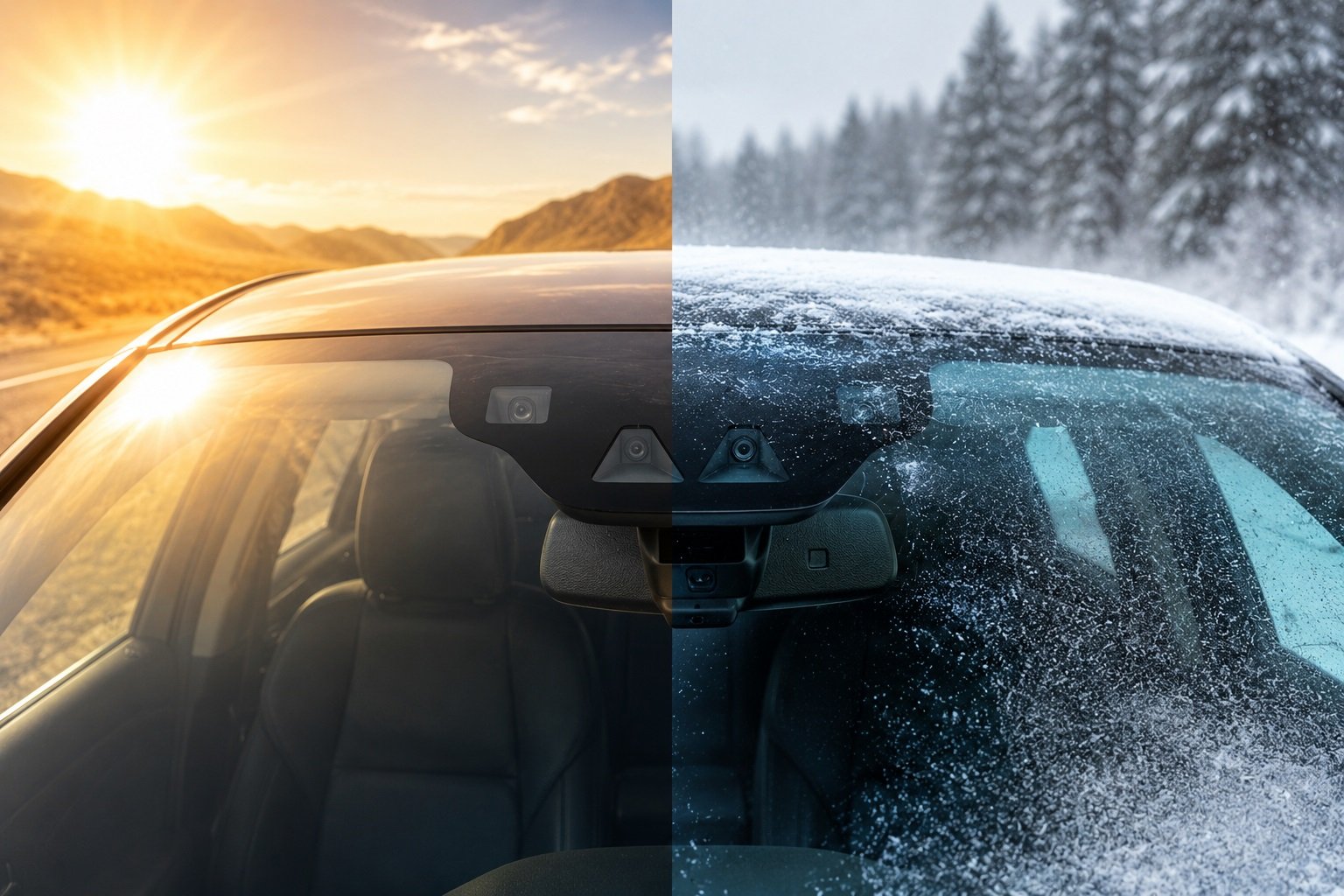
Your windshield is no longer just a piece of glass. Today, it serves as the mounting surface for an increasingly complex array of technology: forward-facing cameras, rain sensors, lane departure systems, and Advanced Driver Assistance Systems (ADAS) components.
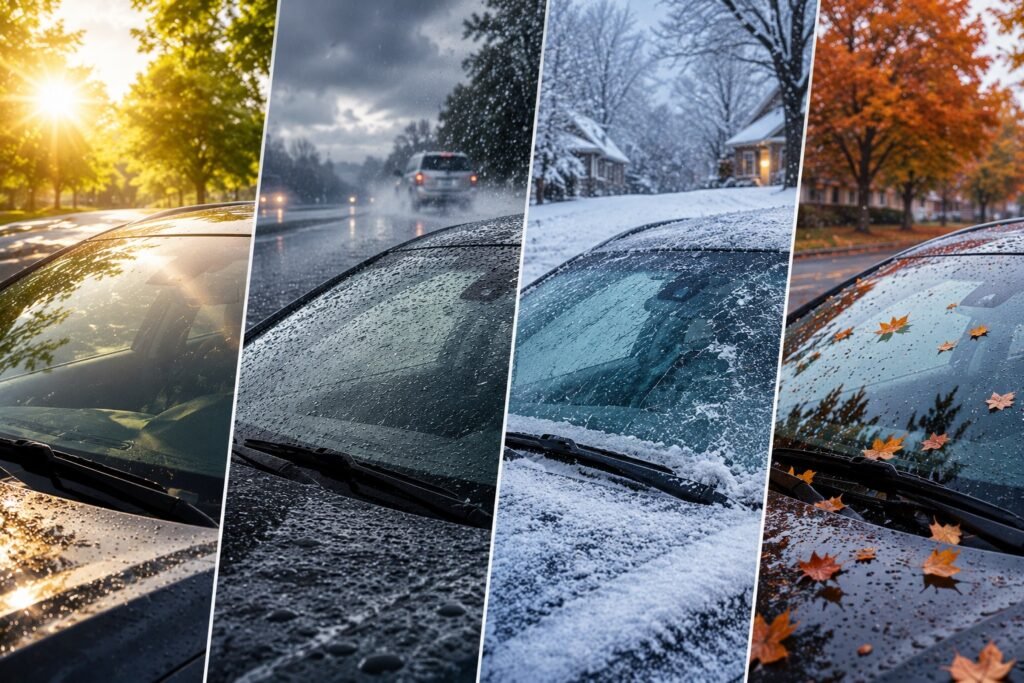
These sensors work together to keep you safe. However, temperature swings, whether from a scorching summer afternoon or a bitter winter morning. The varied and harsh temperatures put serious stress on these systems in ways most drivers never consider.
If you’ve ever needed a windshield replacement, understanding how temperature affects the cameras and sensors behind the glass matters more than you might think.
Heat Is Harder on Sensors Than You’d Expect
When you park your car under direct sunlight, the interior temperature can spike well above 130°F. The dashboard and windshield area absorb the most heat. For ADAS cameras mounted near the rearview mirror, this creates two distinct problems.
First, extreme heat throws off calibration. ADAS cameras rely on precise alignment to calculate distances, detect lane markings, and identify obstacles. Heat causes the mounting bracket and surrounding materials to expand slightly. Even a minor expansion shifts the camera’s angle.
As a result, the system may misread distances or trigger false warnings, or worse, fail to trigger real ones.
Second, high temperatures directly affect image quality through something engineers call “image noise.” When a camera sensor overheats, it generates random electrical signals that appear as grainy or distorted pixels in the image.
So instead of a clean, sharp image of the road ahead, the camera processes a compromised one. Most modern ADAS systems compensate up to a point, but prolonged exposure to extreme heat degrades performance in ways the system cannot fully correct.
Rapid Temperature Changes and Sensor Fogging
Consider a common scenario: you leave work on a cold winter evening after your car has been sitting in freezing temperatures. You blast the heat. Within minutes, the interior temperature climbs sharply. That sudden shift creates a problem known as sensor fogging inside the mounting bracket.
The mounting bracket that holds your camera against the windshield creates a semi-enclosed space. When warm, moist cabin air contacts the cold surface of the camera or bracket interior, condensation forms.
This thin layer of moisture blurs the camera lens and scatters light entering the sensor, degrading image quality almost immediately. Unlike fogging on a side window, you can’t wipe this away easily. The condensation forms inside the bracket, where airflow is limited.
Some vehicles use small heating elements to combat this, but not all do. In climates with dramatic temperature swings between day and night, or between seasons, this issue repeats itself frequently, gradually wearing on the system.
Freeze-Thaw Cycles and Structural Damage
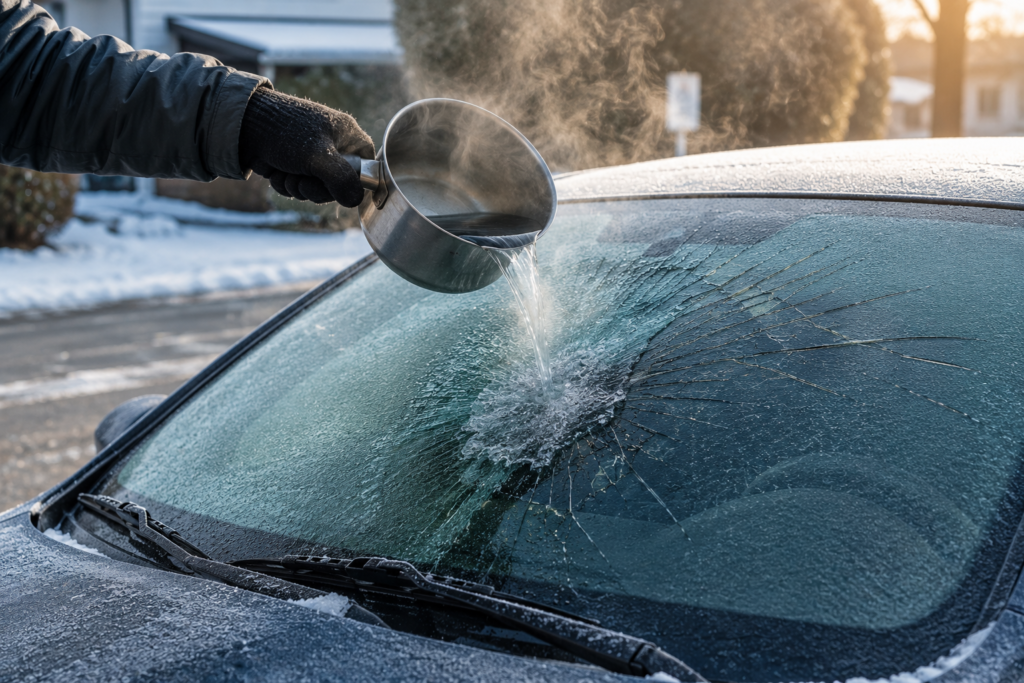
Winter brings another threat: the freeze-thaw cycle. Temperatures drop below freezing overnight, then climb above it during the day.
This cycle repeats dozens of times throughout the season, and each repetition puts mechanical stress on the adhesive and seals holding your sensors in place. The adhesive bonding the camera mount to the windshield expands and contracts with each temperature change.
Over time, this repeated movement weakens the bond. Seals around the bracket can crack, allowing moisture to penetrate further into the housing. Once moisture reaches internal components, corrosion becomes a serious risk.
Furthermore, the windshield glass itself expands and contracts with temperature. The mounting bracket does the same, but at a different rate, because glass, plastic, or metal expand at different speeds.
This mismatch puts constant stress on the bonding point between the bracket and the glass. After enough cycles, the mount loosens. A loose camera mount means the calibration drifts unpredictably, often without triggering a warning light.
Why Windshield Replacement Requires Professional Recalibration
All of this context explains why windshield replacement isn’t simply a matter of swapping out glass. When a new windshield is installed, every sensor and camera mounted to it must go through recalibration.
The new glass sits at a slightly different angle than the old one, sometimes by only fractions of a degree. To an ADAS camera, that fraction matters enormously.
Static recalibration requires positioning a target board at a precise distance and angle in front of the vehicle. Dynamic recalibration involves driving the vehicle under specific conditions so the system can self-correct using real-world data.
Either way, skipping recalibration after a windshield replacement leaves the entire safety system operating on bad assumptions.
Protecting Your Sensors Year-Round
A few habits make a real difference. Park in a garage or shaded area during peak summer heat to reduce thermal stress on the camera housing.
In winter, allow the car to warm up gradually rather than blasting the heat immediately, which reduces the severity of temperature transitions inside the cabin. Avoid using sharp instruments or strong solvents near the camera mount during cleaning.
Most importantly, if you notice ADAS warnings becoming frequent or inconsistent, don’t dismiss them. Temperature-related sensor drift is a real issue, and catching it early prevents a minor calibration problem from turning into a safety hazard.
At Starbright Auto Glass, proper recalibration after every windshield replacement is standard practice, because getting the glass right is only half the job.
Why Starbright Auto Glass Is a Reliable Option
Starbright Auto Glass is one of the industry’s leading experts in the Delaware area. With extensive knowledge and experience, we have emerged as the most trusted auto glass repair in Delaware.
We’re known for quick response times, on-site service, and mobile windshield repair services that make the process easier for our customers. Our team can also help with windshield cameras and sensors while keeping downtime as minimal as possible. We also take time to educate our customers on how to avoid windshield camera damage and what precautions to take during harsh weather conditions.