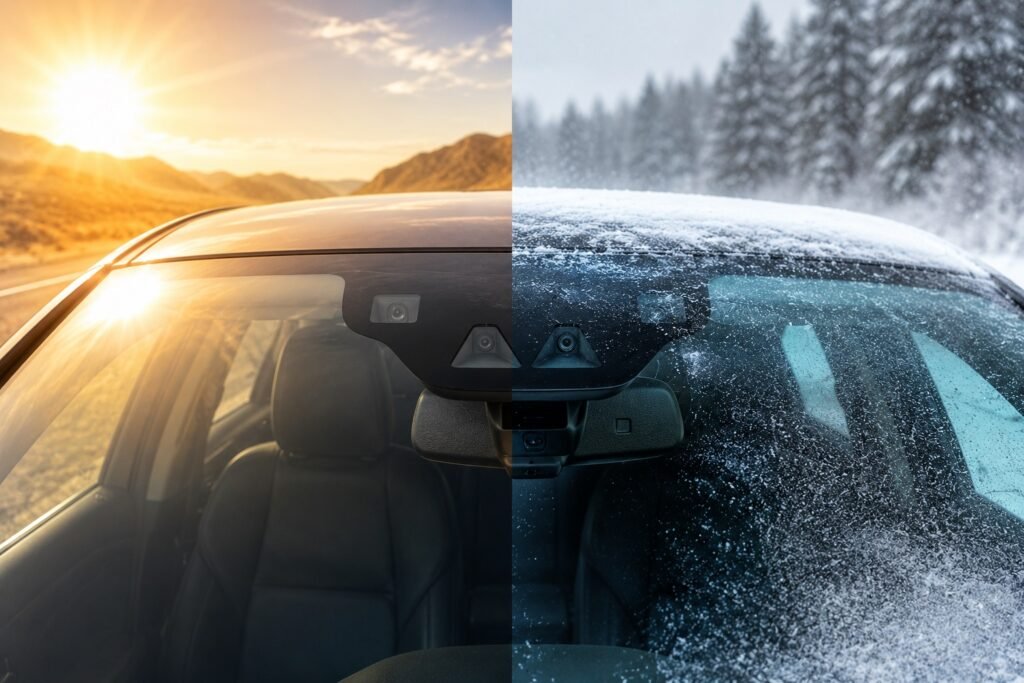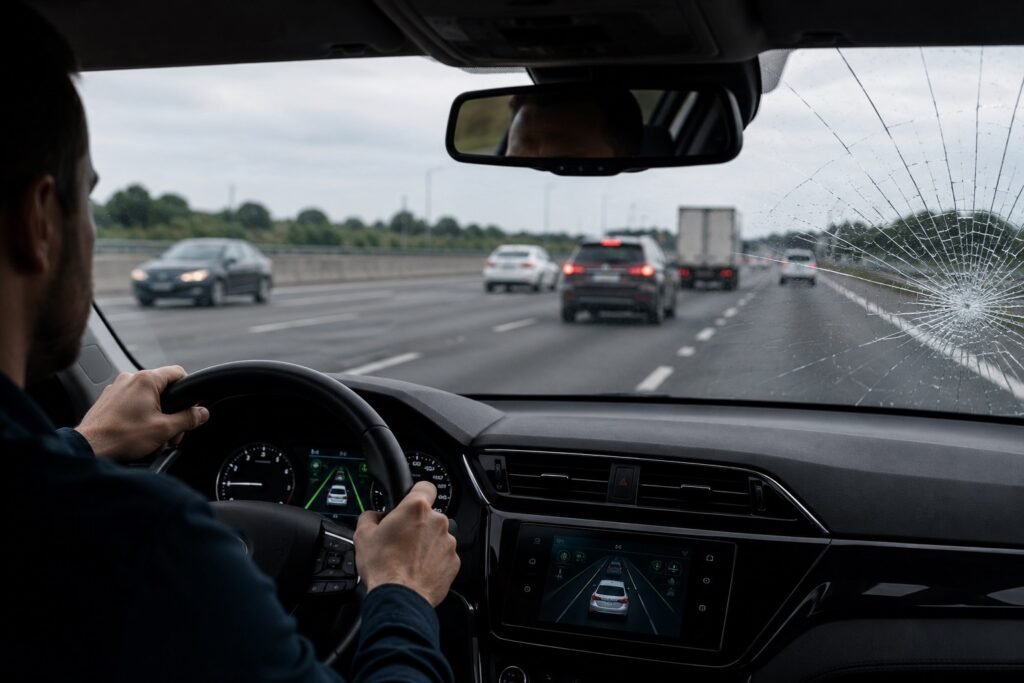
Newer models of cars do more than just get you from point A to point B; they actively keep you safe. If you drive a car built within the last few years, your windshield likely houses a complex network of cameras and sensors.
These tools form the Advanced Driver Assistance System, or ADAS. While we often think of the windshield as just a piece of glass, it actually serves as the eyes for your car’s safety brain.
When that glass breaks and requires a windshield replacement, simply swapping the glass is not enough. You must also get ADAS calibration.
Without this step, your car might see the road incorrectly, leading to dangerous errors in judgment by the vehicle’s software.
Understanding ADAS Like an Expert Mechanic
So, this new technology, ADAS in cars, includes features like Lane Departure Warning, Automatic Emergency Braking, and Adaptive Cruise Control.
While most of these systems depend on a front camera mounted directly behind the rearview mirror. This camera looks through the windshield to identify lane markings, pedestrians, and other vehicles.
When a technician performs a windshield replacement, they must remove this camera and attach it to the new glass. Even if they use the original mounting bracket, the camera’s perspective shifts.
In the world of automotive safety, a shift of just one millimeter can translate to a vision error of several feet further down the road.
Calibration is the process of resetting these sensors to ensure they are aimed exactly where the manufacturer intended.
Why Calibration is Mandatory, Not an Option
Many drivers ask if calibration is truly necessary or just an upsell. The reality is that manufacturers like Honda, Toyota, and Ford mandate this service. If you skip it, your safety systems may become unreliable.
Imagine your car’s Automatic Emergency Braking system failing to trigger because it thinks a car in your lane is actually on the shoulder.
Conversely, a misaligned sensor could trigger phantom braking, where the car slams on the brakes for no reason, potentially causing a rear-end collision.
At Starbright Auto Glass, we treat calibration as a serious safety step. Driving an uncalibrated vehicle is like wearing someone else’s prescription glasses; your brain (or the car’s computer) receives distorted data, making it impossible to react accurately.
Static vs. Dynamic Calibration: What Does Your Car Need?
Not all vehicles calibrate the same way. Depending on your make and model, your technician will use one of two methods, or sometimes both.
Static Calibration
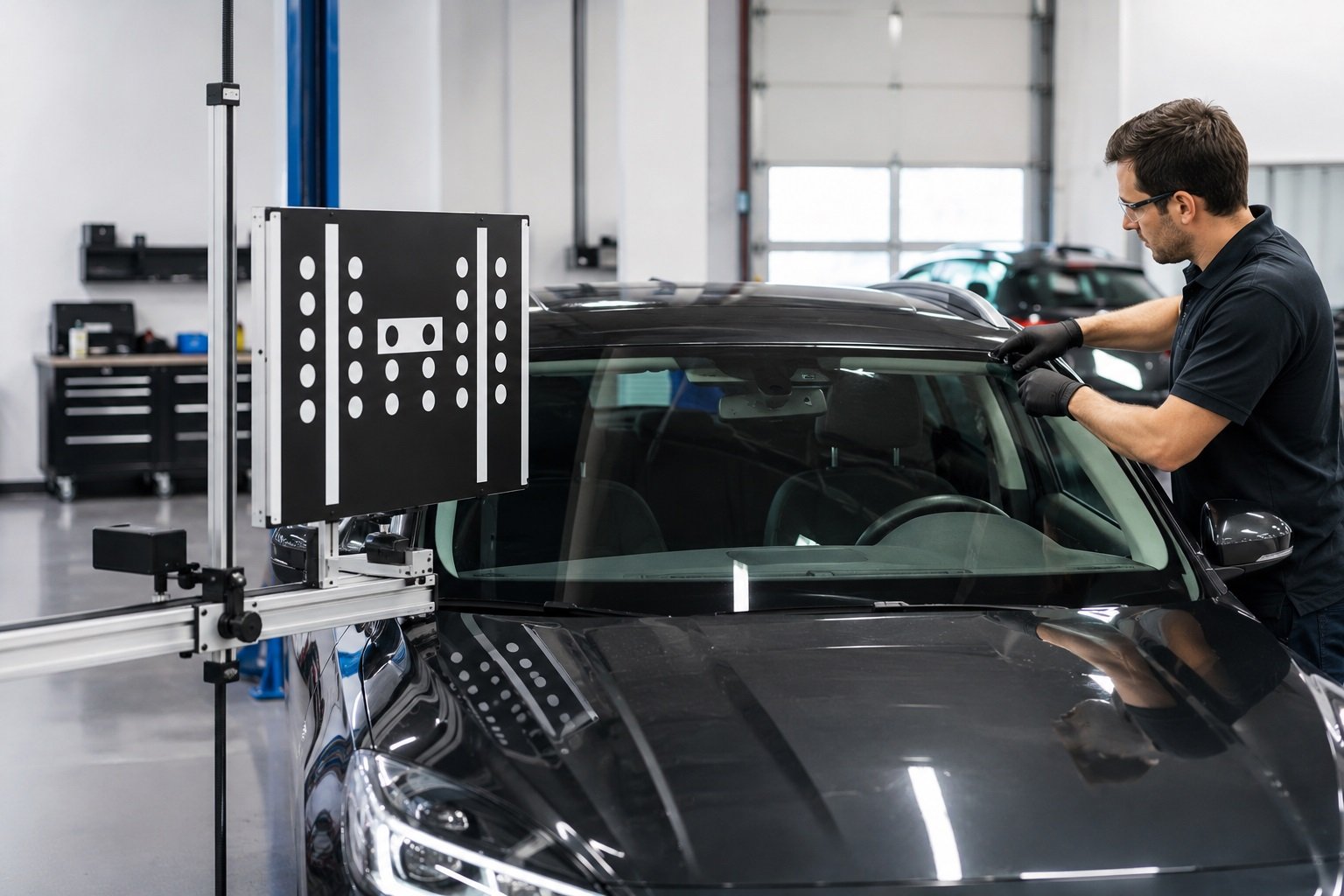
Static calibration happens inside a controlled shop environment. Technicians use specialized diagnostic tools and physical targets (large boards with specific patterns) placed at precise distances from the vehicle. The car’s computer “looks” at these targets to find its center point and adjust its vision.
Dynamic Calibration
Dynamic calibration requires the technician to take the car out on the road. Ideally, the vehicle must be driven at specific speeds on well-marked roads under clear weather conditions.
During this drive, the system learns the road environment and aligns itself based on real-world landmarks like lane lines and traffic signs.
Risks of Skipping the Process
When you ignore ADAS calibration after a windshield replacement, you are entering into risks, such as:
- System Failure: a state of complete shutdown, leaving you without the protection.
- False Alarms: Out of nowhere, the car may beep or vibrate the steering wheel constantly because it thinks you are drifting out of a lane, but you aren’t.
- Legal and Insurance Issues: God forbid, you are involved in an accident, and your safety systems are known to be uncalibrated, you could face liability issues or denied insurance claims.
Frequently Asked Questions
How does a windshield replacement “misalign” my car’s safety sensors?
Even high-quality glass has slight variations in thickness and curvature. When a camera is reattached to new glass, the angle of its “view” changes. Because the software calculates distance and speed based on a precise pixel-perfect perspective, any tiny physical shift breaks the mathematical accuracy of the system.
What are the risks of driving with uncalibrated ADAS cameras?
The biggest risk is unpredictable behavior. Your car might fail to brake when a collision is imminent, or it might steer you toward an obstacle while trying to “correct” a lane drift that isn’t actually happening. It essentially turns a safety feature into a hazard.
Static vs. Dynamic Calibration: Which one does my vehicle need?
This depends entirely on your vehicle’s manufacturer. Some cars, like many Subarus, require static calibration. Others, like many Fords, require dynamic calibration. Some luxury brands require both. A certified technician at Starbright Auto Glass will use your VIN (Vehicle Identification Number) to determine the exact requirements for your specific car.
Trust the Experts for Your Safety
A windshield replacement is a structural and technological repair. You deserve to know that your vehicle will protect you in an emergency. By choosing a professional service that includes ADAS calibration, you ensure that your “invisible copilot” is fully awake and looking exactly where it needs to. Don’t leave your safety to chance. If your windshield is cracked or chipped, visit Starbright Auto Glass to get the job done right, from the first piece of glass to the final sensor check.