Dealing with a dinged windshield is one of those annoying car surprises that can sneak up on you.
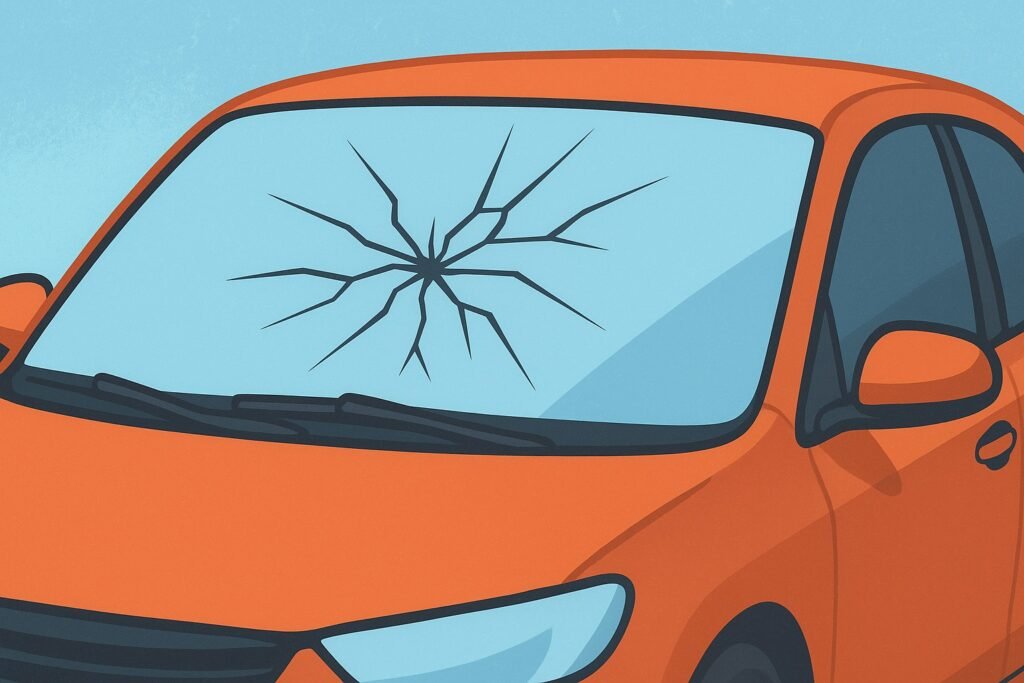
While you’re driving and enjoying the view, a rock flies off the highway. You hear that sharp crack, and within seconds, a chip is staring back at you, throwing off your whole day.
You are internally calculating: Can this be fixed with a quick repair, or do I have to again go for a full windshield replacement?
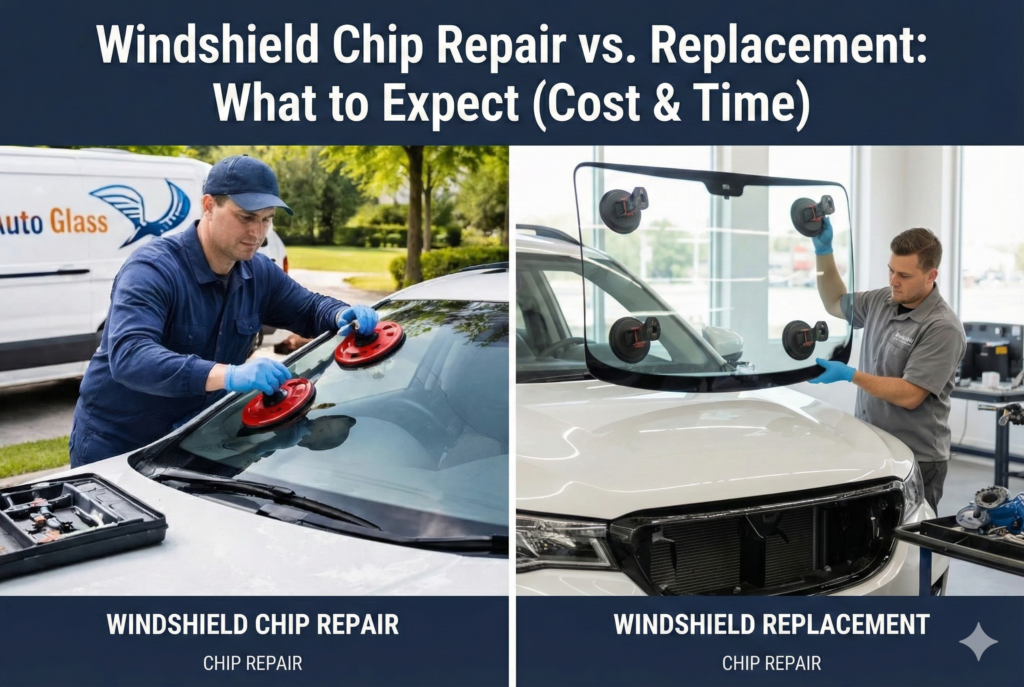
Understanding windshield repair vs replacement helps you make the smarter call. It can save you time, money, and a lot of stress.
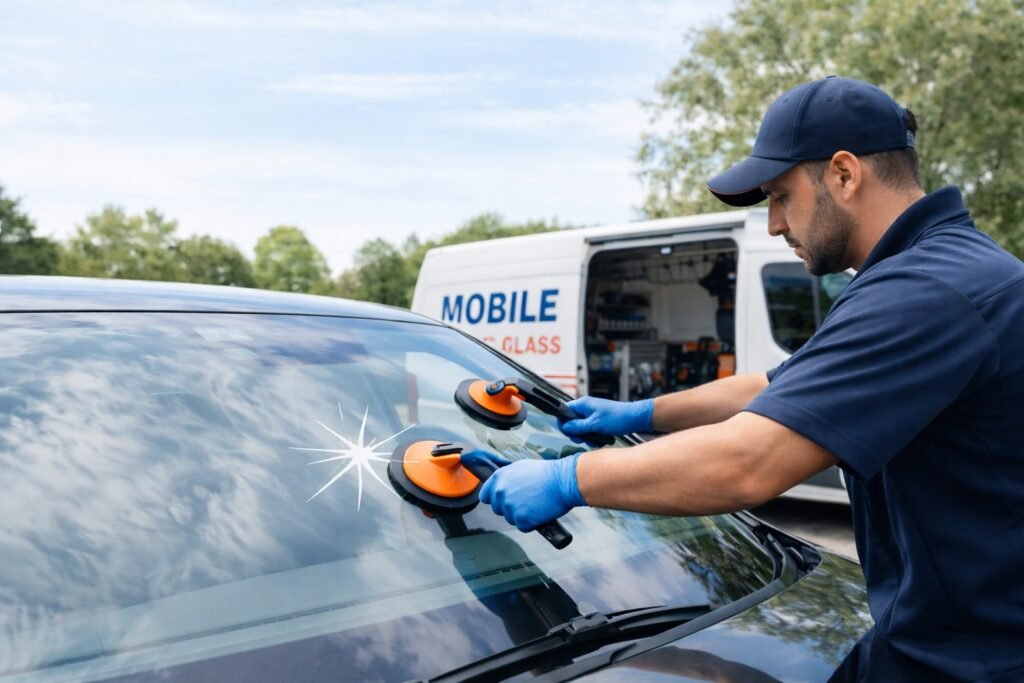
For small damage, a professional injects clear resin into the chip, cures it with UV light, and seals the area to stop spreading. It’s fast, effective, and often barely noticeable afterward.
But if the damage grows or hits certain limits, replacement becomes the only safe option. Let’s break down what to expect in terms of cost, time, durability, and when each makes sense.
Cost of Windshield Chip Repair
The cost of windshield chip repair stays pretty wallet-friendly. For a single small chip or short crack, you’re typically looking at $50 to $150, depending on the shop, location, and how many chips you’re fixing.
Many shops charge around $60–$100 for the first one, with discounts for extras (like $40–$50 each after that). Insurance often covers it with little to no deductible; plenty of policies treat chip repairs as “free” preventive work.
Why so affordable?
It’s a simple process: clean the spot, inject resin, cure, and polish. No parts replacement, minimal labor. Mobile services might add a small fee, but they come to you, which saves hassle.
Windshield Replacement Guide: Costs and Expectations
Replacement jumps the price quite a bit. For standard vehicles without fancy tech, expect $250 to $600 out of pocket. Older cars or basic models lean toward the lower end.
Newer vehicles often cost more due to ADAS (advanced driver assistance systems), including lane-keeping cameras, automatic braking sensors, rain sensors, or heads-up displays. These features can push costs higher, often $800 to $1,500+. Recalibrating those sensors after installation can add $200 to $500 in many cases.
Insurance usually helps here too, especially comprehensive coverage, but you might face a deductible. Luxury or electric cars can hit $1,000+ easily due to specialized glass and calibration needs.
Time Comparison: Repair vs. Replacement
This is where repair really wins for convenience.
A chip repair usually takes 30 minutes to 1 hour, and you can often drive away the same day with almost no downtime.
Replacement takes longer. Basic installs typically take 1 to 2 hours, but it can be 3 to 4 hours if calibration is involved. Add scheduling, adhesive curing time, or waiting for the right glass, and it can turn into a full-day situation.
Many shops offer mobile replacement, but it still takes longer than a quick repair.
Durability and Process Differences
Repair restores strength close to original for small damage, resin bonds the layers, prevents further cracking, and keeps the windshield structurally sound. It’s durable long-term if done right on clean, fresh chips.
Visibility improves dramatically, though a faint outline might remain. Replacement gives you a brand-new windshield: perfect clarity, full structural integrity, and factory-spec performance.
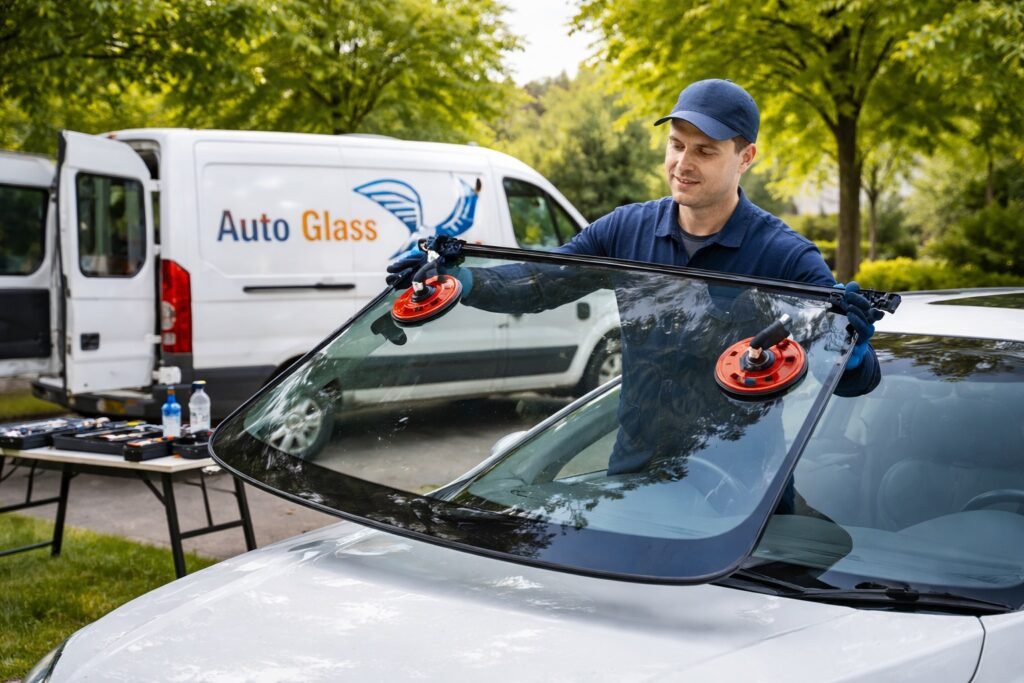
The process involves removing the old glass, prepping the frame, installing the new one with urethane adhesive, and often recalibrating sensors. It’s more invasive but necessary when repair won’t hold.
Durability edge goes to replacement for severe damage, once a crack spreads or compromises layers, repair can’t fully restore safety.
When to Choose Repair
Go for repair when:
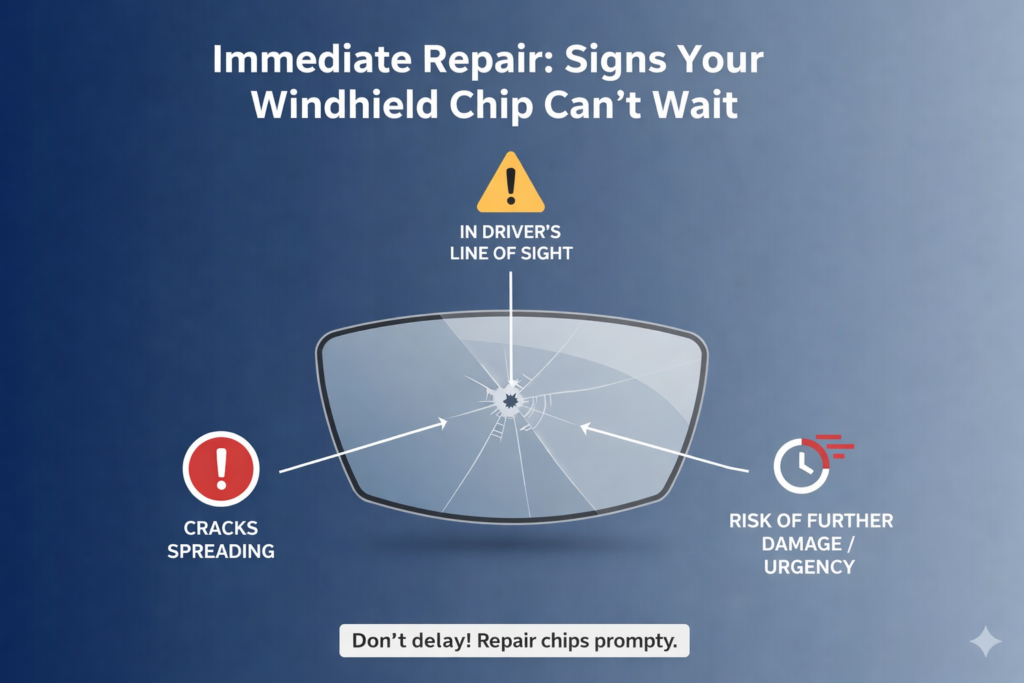
- The chip is smaller than a quarter (about 1 inch) or a crack shorter than 3 inches (some say up to a dollar bill’s length).
- Damage isn’t in your direct line of sight or near the edges.
- It’s shallow (not through both laminated layers) and caught early, no dirt, water, or spreading.
- You want quick, cheap, and effective prevention.
Early action here saves big; a $100 repair beats a $500+ replacement every time.
When Replacement Is the Better (or Only) Choice
Opt for replacement if:
- Crack longer than 3–6 inches, or chip bigger than a quarter.
- Damage at the edge (weakens roof support in crashes).
- Multiple chips/cracks close together, or deep penetration through layers.
- In driver’s critical view, causing distortion/glare.
- Tempered glass (not laminated) or structural compromise.
Safety first: A weakened windshield fails in accidents, risking ejection or roof collapse.
Bottom line
Assess the damage quickly. Snap a photo, measure it against a coin, and pay attention to where it’s located. If you’re unsure, get a quick inspection.
If you’re in Claymont, Delaware, a reputable local shop like Starbright Auto Glass can help you decide whether repair or replacement is the safer choice. For minor chips, repair is usually the clear winner for cost, time, and convenience. For larger or riskier damage, replacement is the best way to stay safe and road-legal.
Don’t let a small chip turn into a big bill. Handle it early and drive with peace of mind.