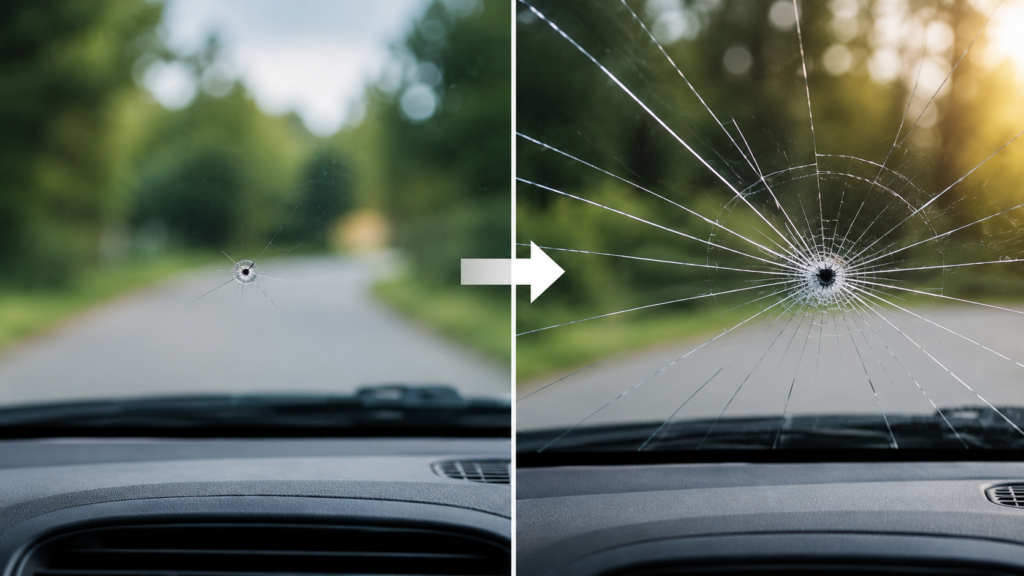
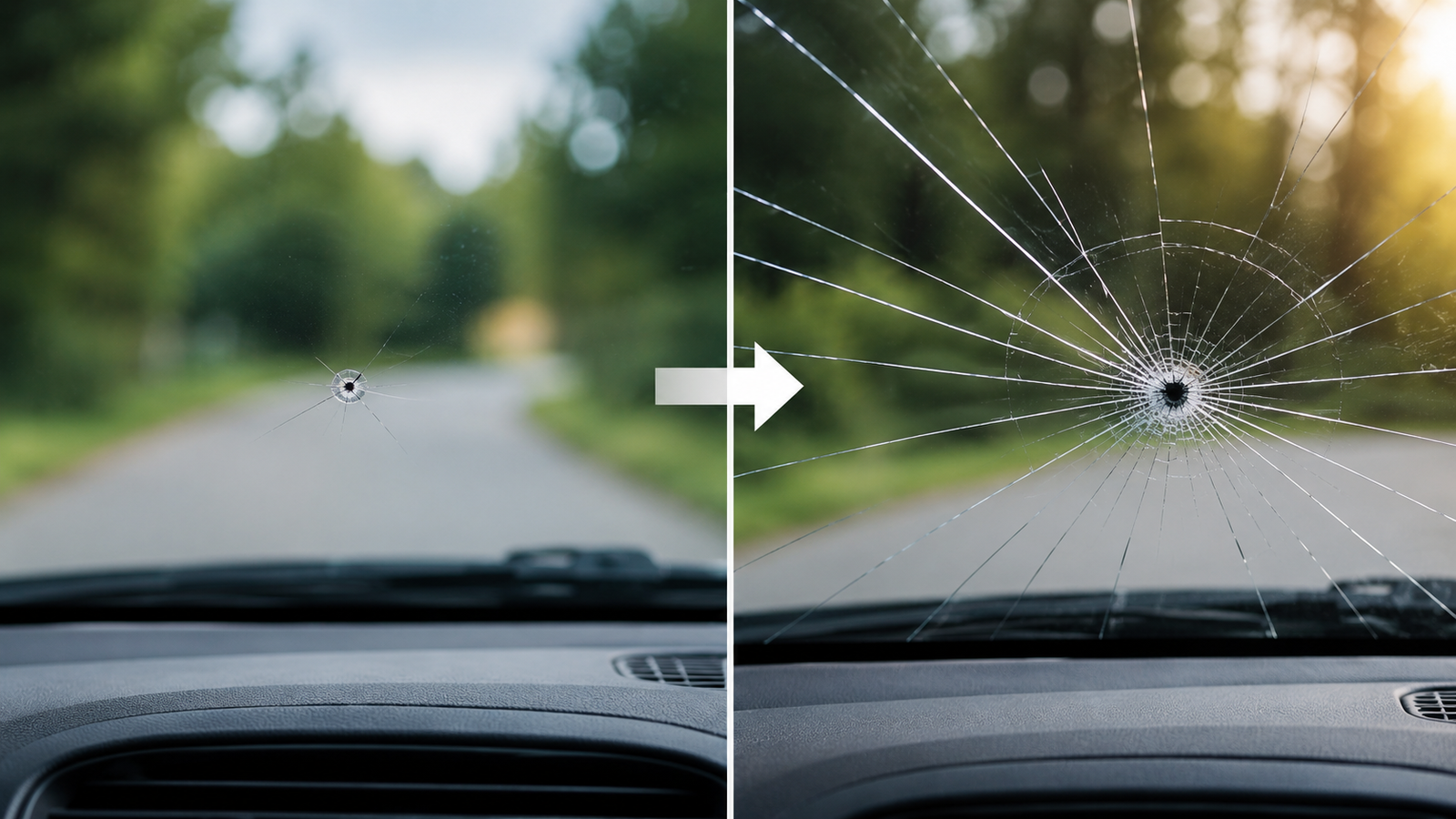
A tiny chip in your windshield rarely stays tiny for long. Auto glass industry data shows most replacements start as a chip smaller than a coin.
Most drivers notice a small mark and assume it can wait until next month. That single decision often turns a five dollar fix into a full windshield replacement. This article explains exactly how and why small cracks grow.
How a Tiny Chip Turns Into a Major Crack
Your windshield is not one solid sheet of glass. Instead, it uses two glass layers bonded around a thin plastic interlayer. This design, called laminated glass, keeps the windshield intact during impact.
However, once a chip breaks the surface, that protection weakens at one exact point. Stress naturally concentrates around any break in the glass. Every bump, vibration, or temperature shift pushes against that weak point first.
What’s more, moisture also plays a sneaky role here. Rain and humidity seep into the crack and settle between the layers. This moisture loosens the bond further and speeds up the spread. Left untreated, a small crack can stretch several inches within just 24 hours.
Role of Temperature in Crack Growth
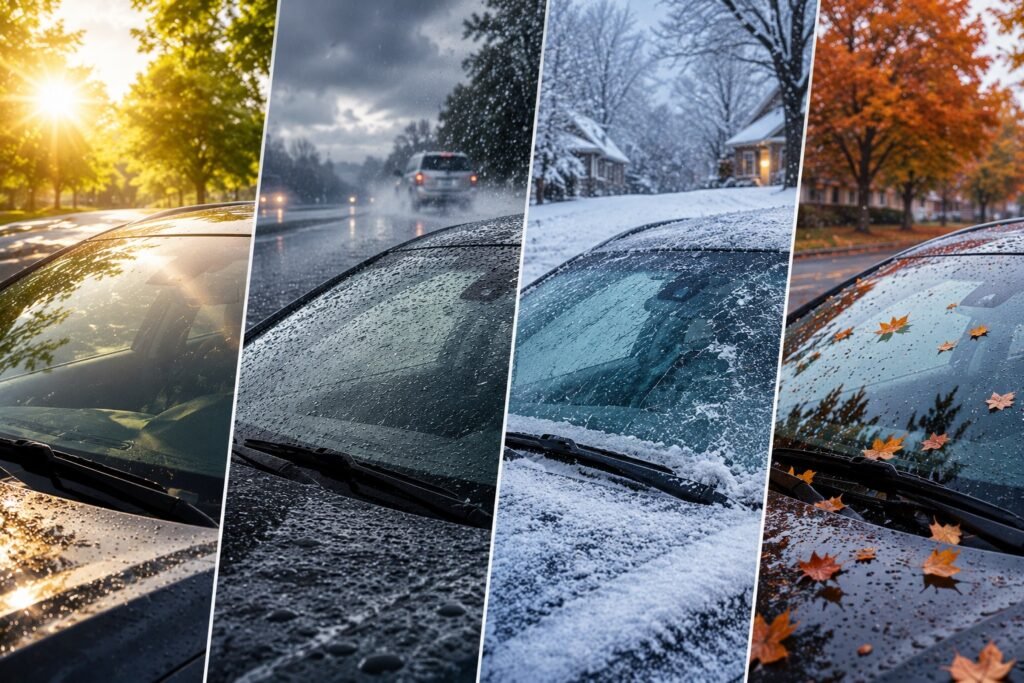
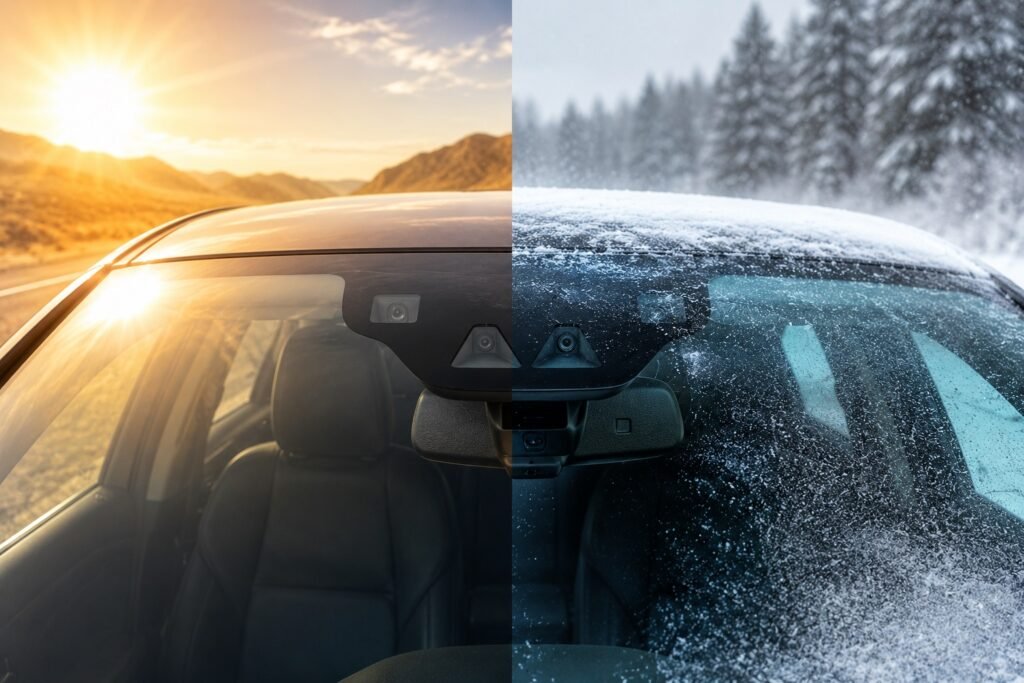
Temperature swings cause more crack growth than almost any other factor. Glass expands when heated and contracts when cooled, even slightly. Once outside temperatures drop below freezing, a windshield crack becomes 60 percent more likely to grow larger.
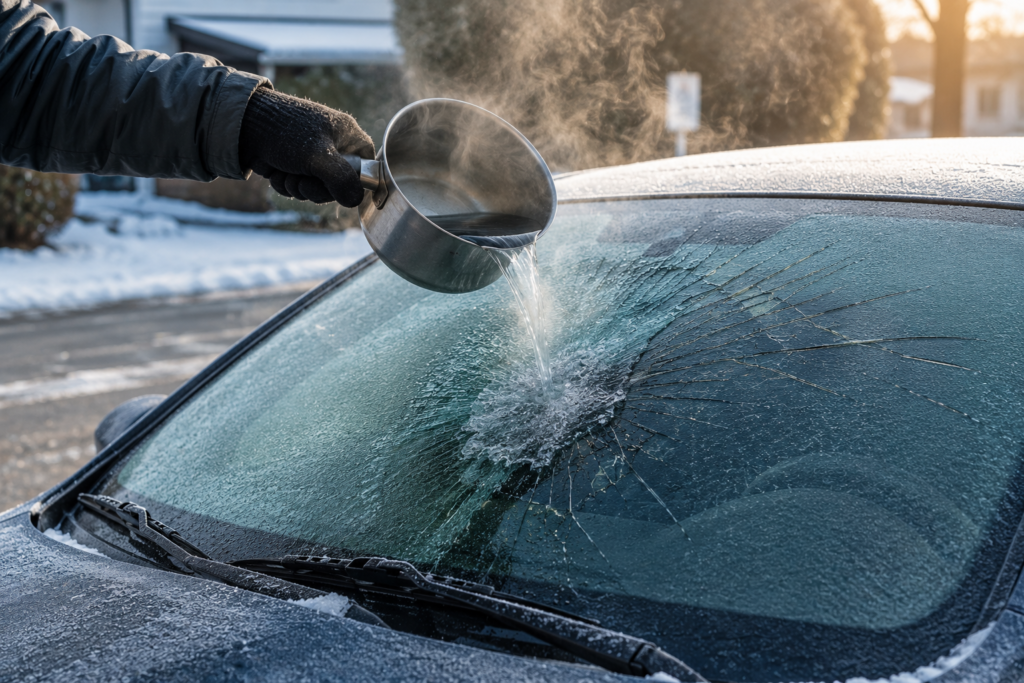
Your defroster makes this worse during winter mornings. Blasting hot air onto frozen glass forces rapid, uneven expansion across the surface.
The same problem happens in reverse during the summer. Texas cabin temperatures can climb past 150 degrees Fahrenheit in direct sunlight. Then a sudden rainstorm or blast of air conditioning cools the glass too fast.
Climate also shapes how fast cracks travel. Dry, low-humidity regions like Arizona see faster crack growth than humid areas. Without moisture to slow the process, dry heat makes glass more brittle over time. So, your local weather pattern matters just as much as the crack itself.
Why Edge Cracks Spread Faster Than Center Cracks
Not every crack behaves the same way. Cracks starting near the windshield frame, known as edge cracks, spread fastest of all. The outer edges receive less structural support than the center of the glass.
As a result, normal driving stress reaches that weak edge almost immediately. These start as small impact points with cracks branching outward. Vibration and temperature changes still cause them to spread, just more gradually at first. Either way, every crack type eventually reaches a tipping point.
How Driving Conditions Accelerate the Spread
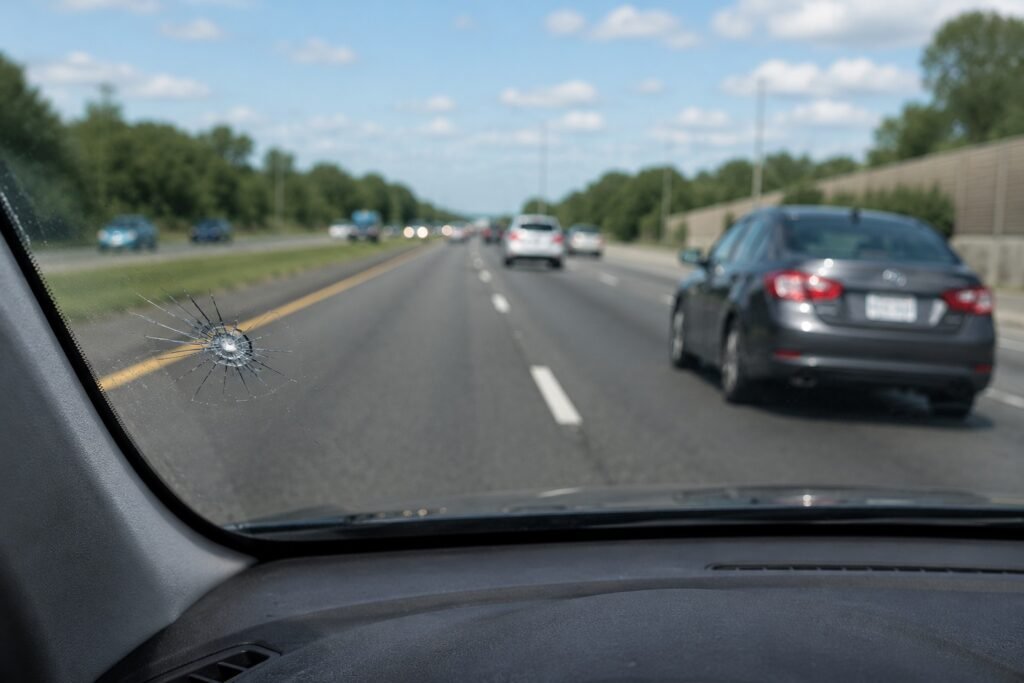
Daily driving habits speed up crack growth more than most people expect. Higher driving speeds increase wind pressure directly against the damaged glass. That added pressure puts constant tension on the weakened area.
Potholes and rough roads make the problem worse with every jolt. Each bump sends a small shockwave through the entire windshield structure. Even slamming a car door more than normal force can rattle a crack enough to extend it.
Highway driving combines several of these stress factors at once. That is why crack growth often shows up after a long road trip. Interestingly, cracks can keep spreading even while your car sits parked overnight, since temperature alone drives much of the damage.
Common Myths About Small Windshield Cracks
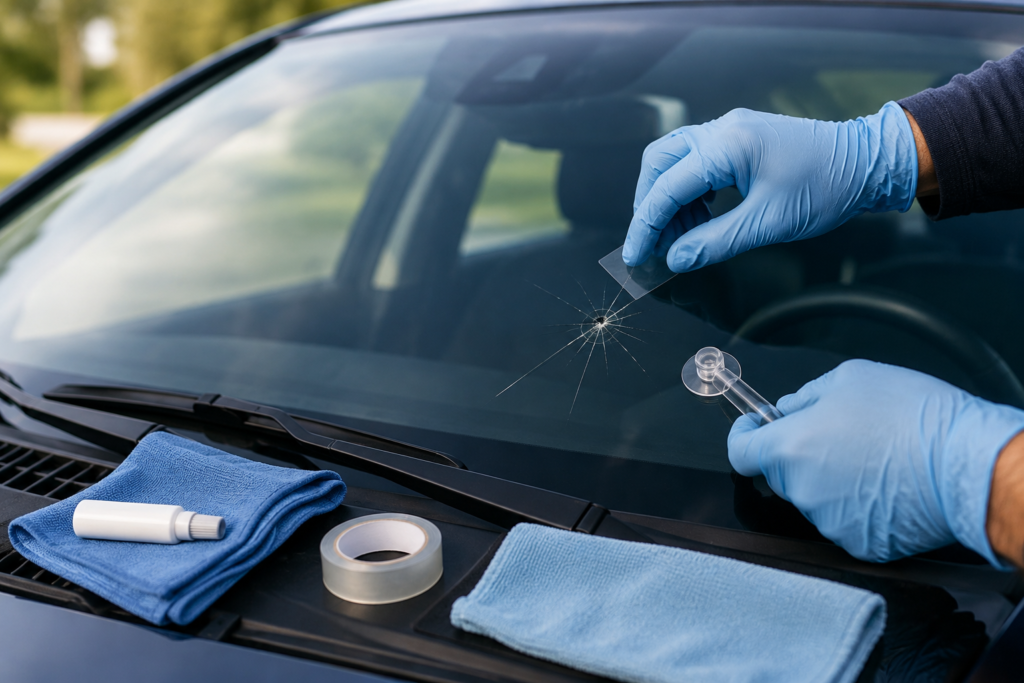
Many drivers try home remedies before calling a professional. Clear nail polish is a popular myth, but it does not stop crack growth. At best, nail polish slows moisture slightly; it never restores structural strength. Clear tape works about the same way, offering a short-term patch at most.
Some drivers also believe ignoring a small chip causes no real harm. That belief leads to the most expensive outcome, a full replacement instead of a quick repair. So, while a quick fix at home feels convenient, professional repair remains the only real solution.
When a Small Crack Crosses the Line Into Windshield Replacement
Most chips smaller than a quarter, with cracks under six inches, still qualify for simple repair. Once a crack passes that six-inch mark, professionals usually recommend full windshield replacement instead. Cracks reaching the edge of the glass almost always need replacement, too.
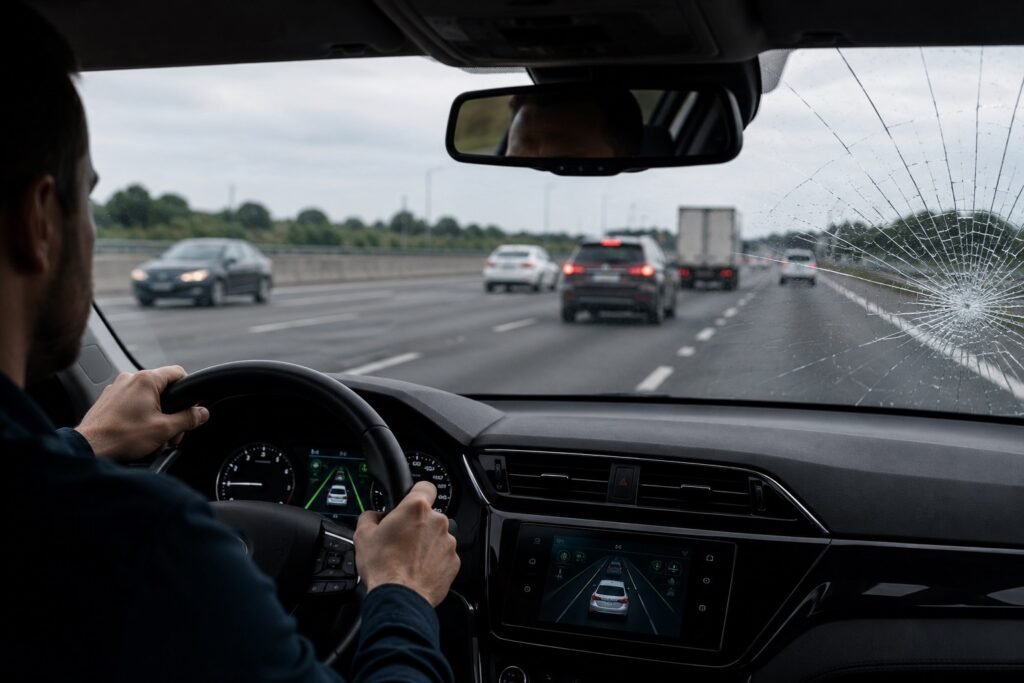
Waiting rarely saves money in the long run. A repair often costs a fraction of a full windshield replacement. The longer a small crack sits, the more likely it is to spread into the driver’s direct line of sight.
At that point, the damage becomes both a safety risk and a likely legal issue. Many comprehensive insurance policies cover this cost with little or no deductible. Checking your policy early often makes the decision to repair even easier.
Final Thoughts
A small windshield crack is never just a cosmetic flaw. Heat, cold, vibration, and moisture all work together to spread it further. The smartest move is addressing chips and cracks the moment you spot them. Star Bright Auto Glass offers fast, professional inspection for exactly this reason.
Visit starbrightautoglass.com to schedule a windshield repair or replacement before a small problem grows into a big one.
Frequently Asked Questions
Can a windshield crack really spread while the car is parked?
Yes, temperature swings alone can cause this without any driving at all. Day-to-night temperature shifts make glass expand and contract repeatedly. That movement alone can extend a crack even in a parked vehicle.
Does cold weather actually make a small crack worse?
Cold weather significantly raises the risk of crack growth. Once temperatures drop below freezing, a crack becomes 60 percent more likely to spread. Using a defroster on frozen glass can speed this process up even further.
Is it cheaper to repair a small crack now or wait?
Repairing a small crack almost always costs less than waiting. A simple repair often costs a small fraction of a full windshield replacement. Waiting only raises the odds that the damage spreads into your direct line of sight.
Can a DIY repair kit stop a crack from spreading?
DIY kits can slow minor chips, but they rarely stop a true crack. Most kits also leave visible distortion in the driver’s direct line of sight. A professional repair offers a clearer, longer-lasting result for most situations.