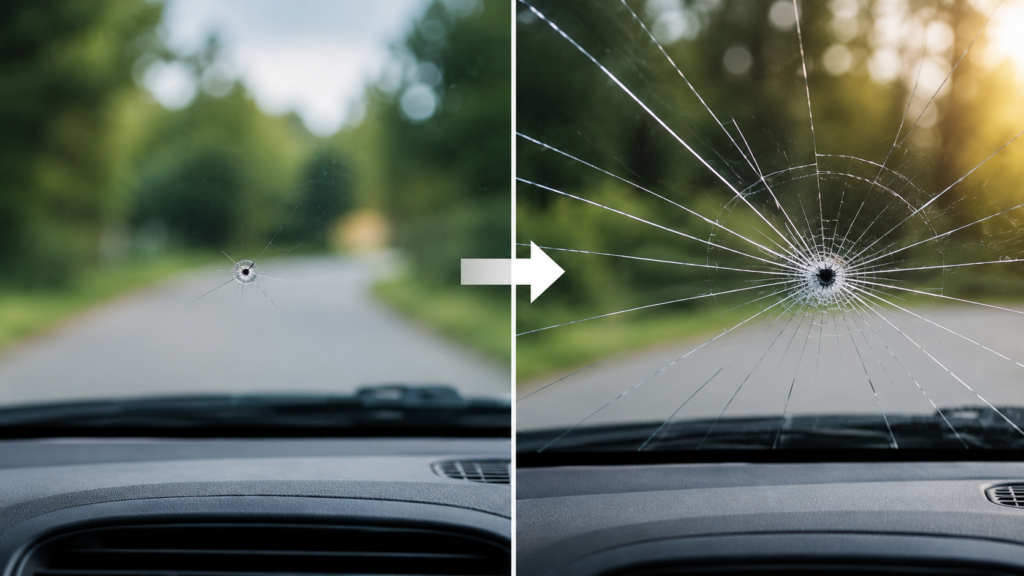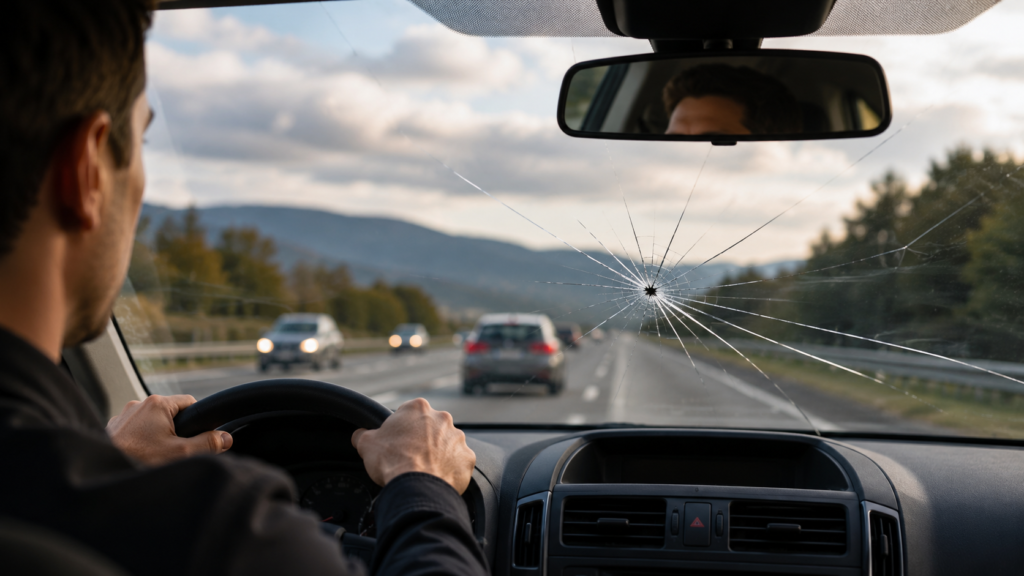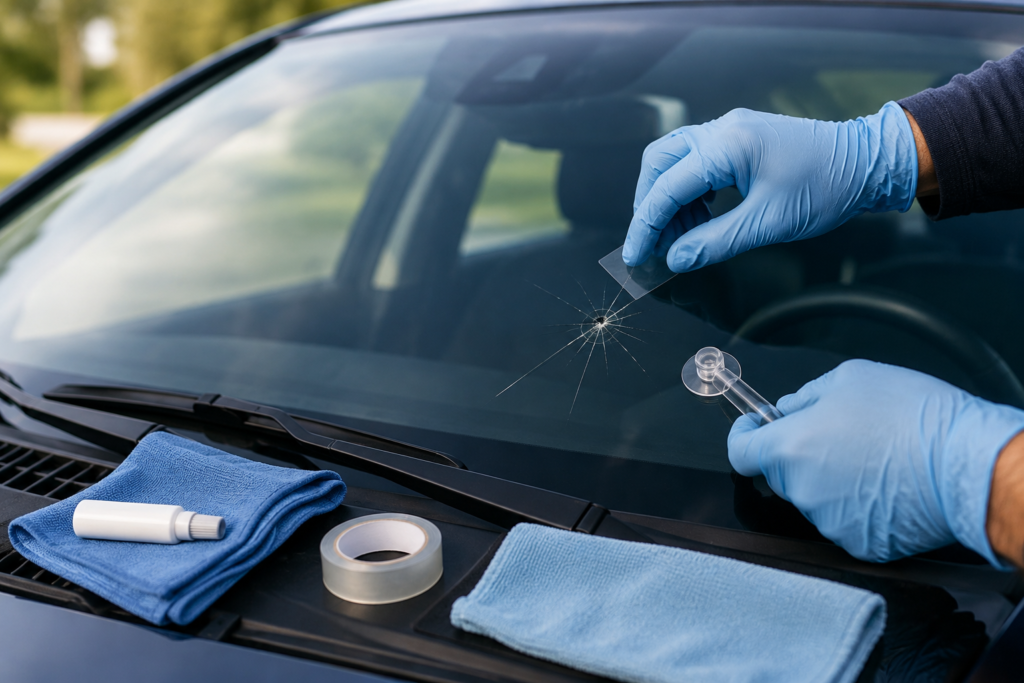
Your windshield does far more than block wind and rain from hitting your face.
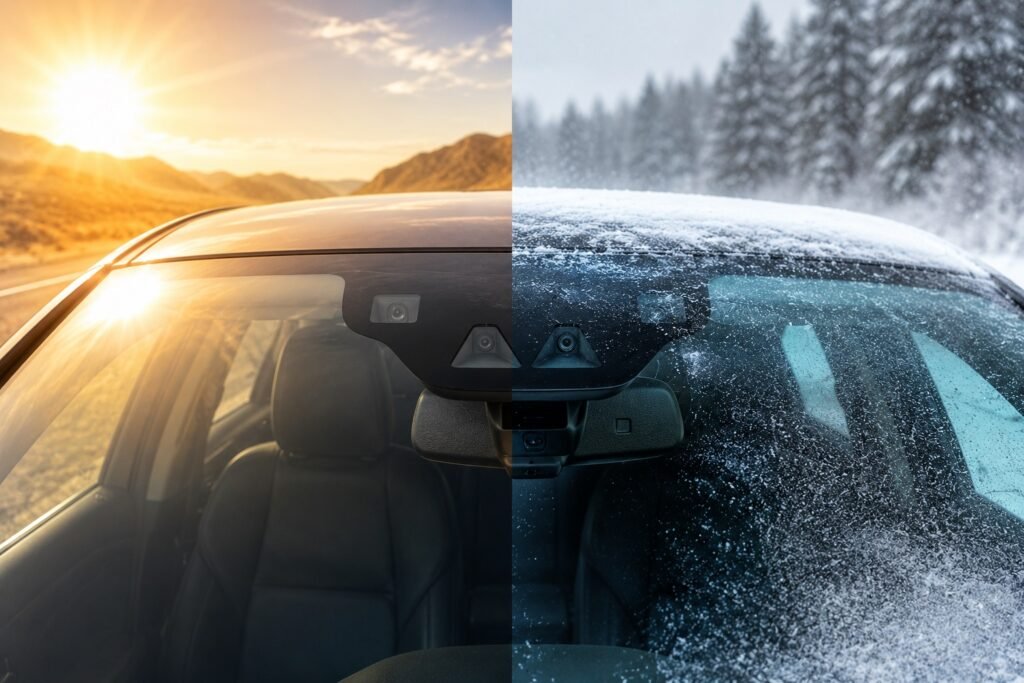
Modern vehicles depend on the windshield as a critical component of their entire safety system. Cameras, sensors, and radar units are mounted directly behind or onto the glass.
They read the road through it constantly. When the glass quality falls short, these systems stop working the way they should.
Most drivers never connect a cheap windshield replacement to a safety system failure. That connection is exactly what this guide covers.
What Low-Quality Glass Actually Means
Not all automotive glass meets the same standard. OEM glass stands for Original Equipment Manufacturer glass. It comes from the same suppliers that build glass for your vehicle’s factory production line.
Aftermarket glass varies enormously. Some aftermarket options meet OEM specifications closely. Others cut costs at every stage of production.
The result is glass with inconsistent thickness, subtle optical distortions, and coatings that don’t perform the way factory glass does.
Here is what separates quality glass from bargain glass:
- Consistent thickness across the entire sheet
- Optical clarity with zero measurable distortion
- UV and infrared coating performance
- Acoustic interlayer quality for noise and vibration
- Compliance with ANSI Z26.1 automotive glazing standards
Bargain glass frequently fails on two or more of these points. Sometimes it fails on all of them.
How Modern Vehicles Use the Windshield as a Safety Tool
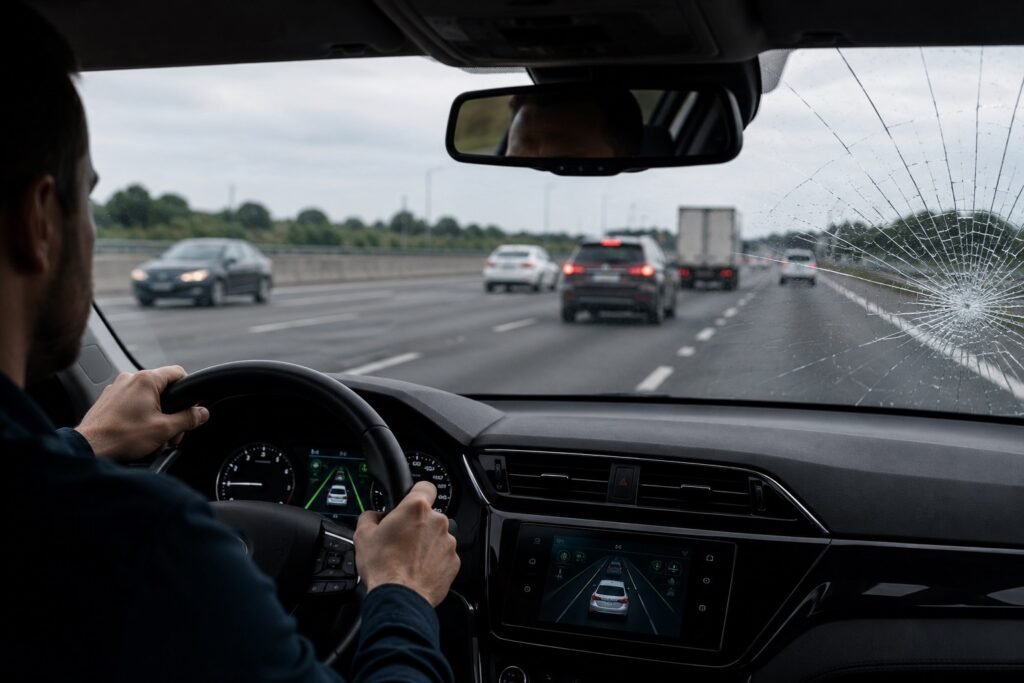
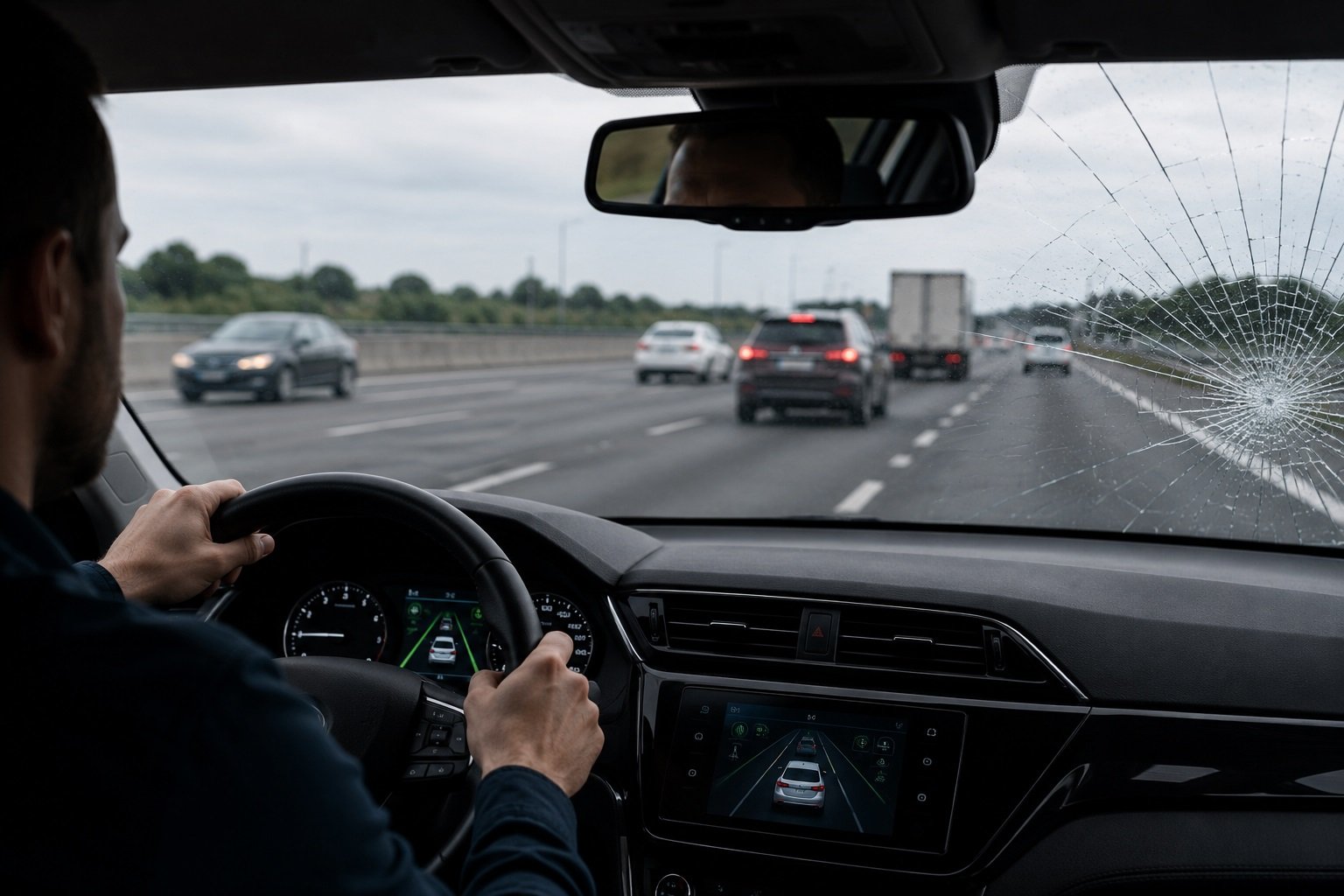
Ten years ago, the windshield was structural support and weather protection. That was largely it. Today, the windshield serves as the primary mounting point and optical pathway for Advanced Driver Assistance Systems.
ADAS includes forward collision warning, automatic emergency braking, lane departure warning, lane keeping assist, adaptive cruise control, and traffic sign recognition.
According to the Insurance Institute for Highway Safety, automatic emergency braking alone reduces rear-end crashes by up to 50 percent. These systems save real lives.
They also depend entirely on clear, undistorted optical pathways through the windshield to function accurately.
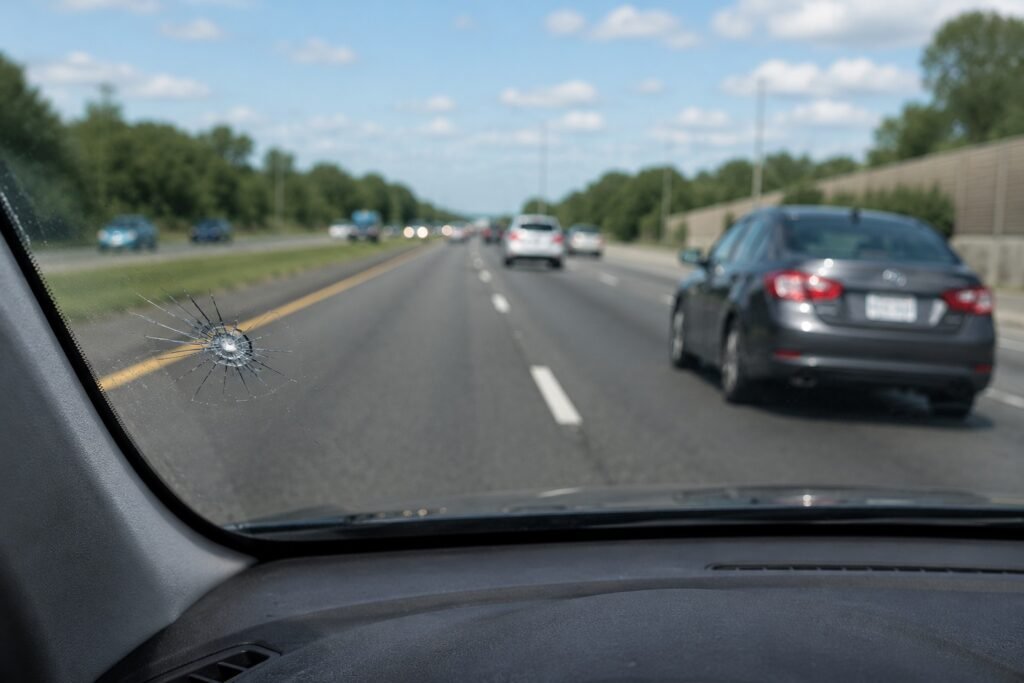
A camera mounted behind the glass reads lane markings at highway speed. It processes thousands of data points per second. Even a minor optical distortion in the glass can throw off that processing. The system either reacts incorrectly or fails to react at all.
Optical Distortion and Emergency Braking Systems
This is one of the most serious and least understood risks of cheap windshield replacement.
Optical distortion happens when the glass thickness varies even slightly across its surface. The human eye often cannot detect it. Your forward collision camera absolutely can, because distortion bends light in ways that alter where the camera perceives objects to be.
A camera seeing a vehicle ahead through distorted glass may calculate its distance incorrectly. The automatic emergency braking system relies on that distance calculation to decide when to activate. If the calculation is off, the braking system either activates too late or not at all.
So yes, invisible optical distortion in bargain glass can genuinely compromise your emergency braking system. You would never see the problem coming. The system would simply fail when you needed it most.
Why Bargain Glass Causes Frequent ADAS Calibration Failures
After any windshield replacement, ADAS systems require recalibration. This is not optional on vehicles equipped with forward-facing cameras.
The Society of Automotive Engineers confirms that even a 0.1-degree change in camera angle after replacement produces significant errors in object detection at a distance.
Calibration works by using precise target boards and manufacturer software to realign the camera’s field of view. The process assumes the glass itself introduces zero optical interference.
Bargain glass violates that assumption. When glass has uneven thickness or surface distortion, the calibration cannot fully compensate. The technician completes the calibration process successfully on paper. The system still underperforms in real conditions because the glass itself remains a source of distortion that the calibration software cannot fix.
AAA conducted research in 2019 showing that ADAS systems performed significantly worse after improper windshield replacement. Forward collision warning systems missed pedestrians and vehicles in real-world tests following replacements that used substandard glass or skipped proper recalibration.
The cost of a bargain windshield frequently becomes the cost of repeated recalibration attempts that never fully resolve the underlying problem.
How Star Bright Auto Glass Approaches This Differently
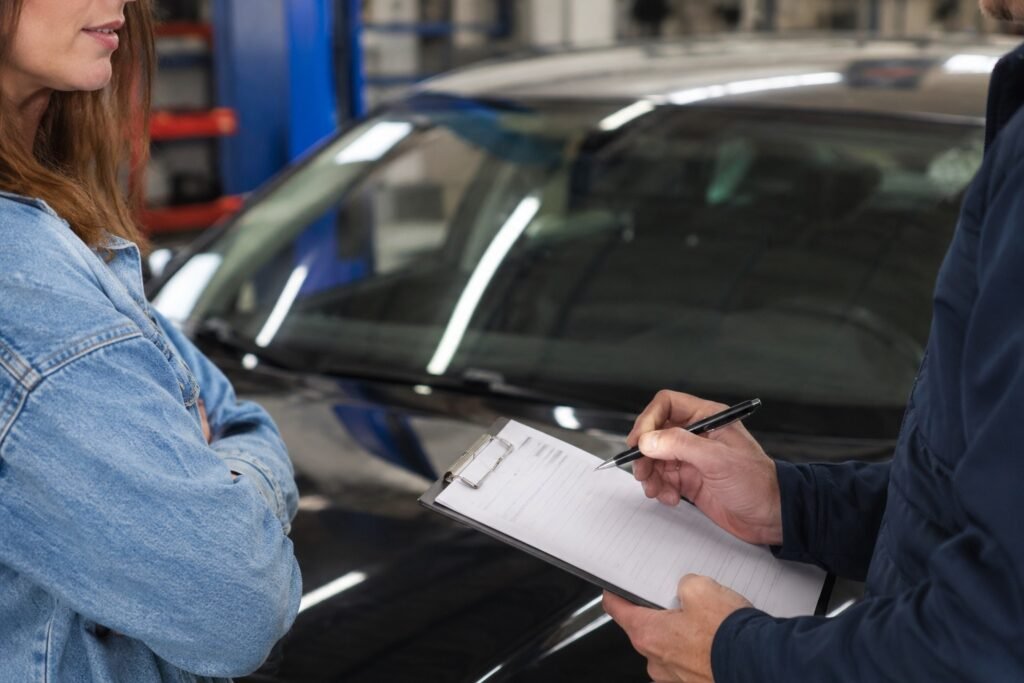
At Starbright Auto Glass, we use OEM and OEM-equivalent glass that meets full optical and structural specifications for ADAS-equipped vehicles. Every replacement on a camera-equipped vehicle includes proper ADAS recalibration using manufacturer-approved procedures.
We understand that windshield replacement on a modern vehicle is a safety-critical procedure. It requires the right glass, the right adhesive, the right installation process, and the right calibration equipment. Cutting corners on any of these steps puts the driver and everyone around them at risk.
Visit starbrightautoglass.com to schedule your replacement with a team that treats your vehicle’s safety systems with the seriousness they deserve.
Frequently Asked Questions
Can invisible optical distortion trick your car’s emergency braking system?
Yes, and it happens more often than drivers realize. Optical distortion in cheap glass alters how the forward collision camera perceives object distances, causing the emergency braking system to activate too late or not at all. The system appears functional during routine driving, but it may fail precisely when a real emergency demands it.
Why does bargain glass lead to frequent ADAS calibration failures?
Calibration corrects for camera angle changes, but it cannot fix the optical interference that the glass itself introduces. Bargain glass with uneven thickness creates distortion that persists after calibration, meaning the camera still receives corrupted input during real driving.
AAA research confirmed in 2019 that ADAS systems on vehicles with substandard replacement glass missed pedestrians and vehicles even after calibration procedures were fully completed.
Does low-quality glass increase the risk of sensor blindness in bad weather?
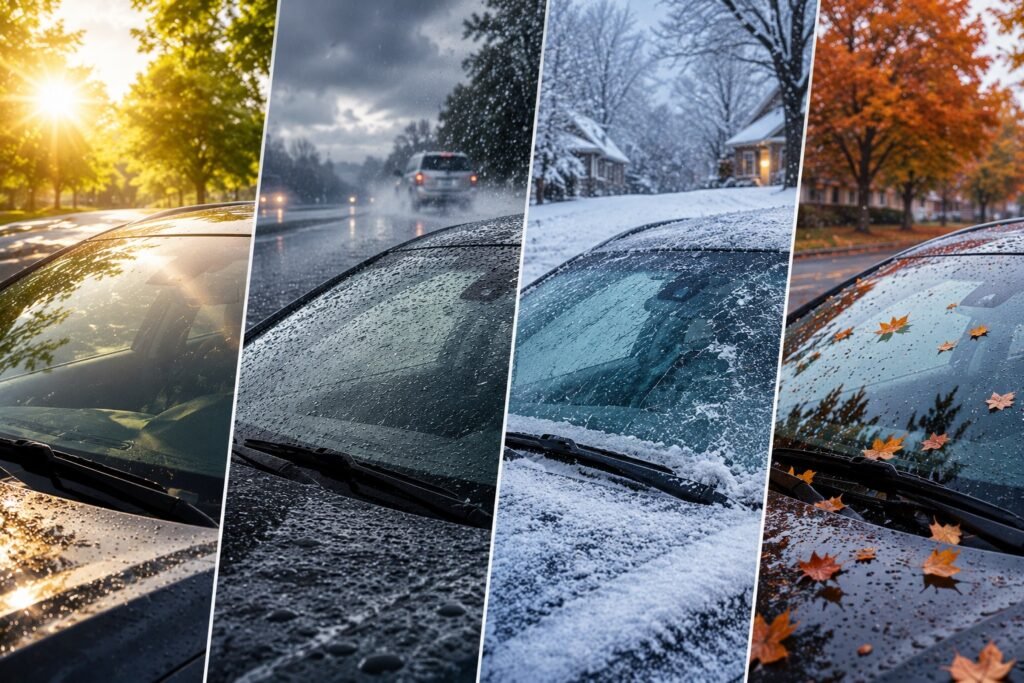
Yes, significantly. Low-quality glass may lack the coatings that maintain optical clarity when rain, fog, and condensation hit the surface. This can cause light to scatter across distortion points and reduce camera contrast detection.
In heavy rain or fog, cheap glass can degrade camera input to the point where forward collision and pedestrian detection systems may no longer read the road accurately.
Final Word
A cracked or damaged windshield feels like a straightforward repair decision. On a modern vehicle equipped with ADAS technology, it is one of the most safety-critical decisions a driver makes.
The glass you choose determines whether your emergency braking system activates in time. It determines whether your lane departure warning sees the road correctly. It determines whether the structural cage around you holds during the crash you didn’t see coming.
Cheap glass costs less today. It costs far more when it matters. Visit starbrightautoglass.com and make sure your replacement protects everything the original glass was designed to protect.